
Running a card show booth — display, security, and teardown basics
A working 10x10 booth layout: what to bring, how display cases and spinner towers earn their space, security habits that keep inventory safe, and a teardown order that speeds up load-out.
A show booth is a temporary retail counter, and it works best when it's built like one: a clear boundary between buyer and stock, nothing valuable left where a hand can reach it unwatched, and a setup that comes down as fast as it goes up. None of this is complicated, but it's the kind of thing that only gets systematized after the first show where something walked off a table.
What to bring
Beyond the inventory itself, a booth runs on a short list of unglamorous equipment: a table and table cover, a chair, display cases for graded or high-value stock, a spinner tower or two for bulk singles, signage and pricing, a power strip and extension cord (venue outlets are rarely where you need them), packing supplies for on-site sales — sleeves, toploaders, small bags — a calculator or card reader, blank inventory sheets, and a hand truck or cart for load-in. None of it feels optional once you've done a show without it a single time.
Display and security basics
The table is doing more than holding product — it's the boundary between you and the aisle. Stand behind it, back to the drape, and let buyers approach from the front. That single habit — table between you and everyone who isn't you — solves most of the passive security problem before it starts.
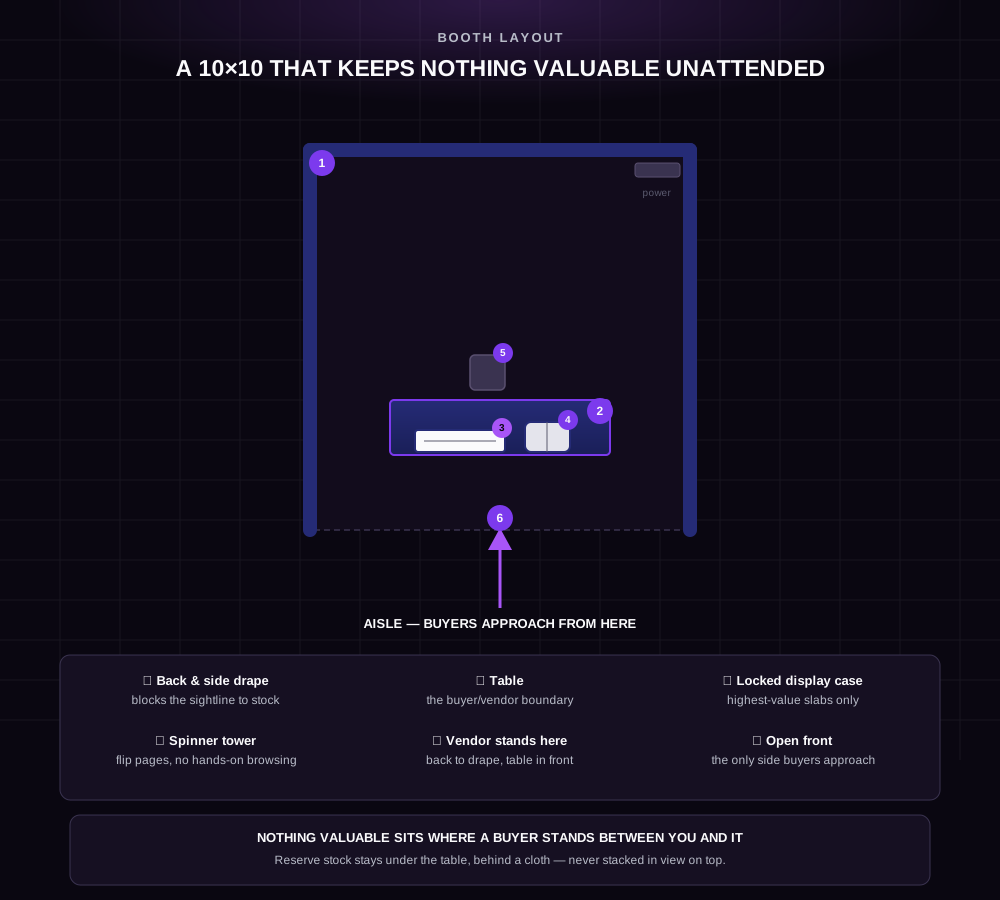
Beyond table position:
- Keep the highest-value slabs in a locked display case, not loose on the table. A case that locks is a deterrent as much as a barrier — it signals the stock inside is worth taking seriously, and it slows down anyone who isn't a genuine buyer.
- Reserve stock stays under the table, not stacked in view. What's visible on top should be what's actively for sale, not the full extent of what you're carrying.
- Never leave the booth unattended, even for a minute. If you're working solo, that means planning bathroom and food breaks around a second person, not skipping them.
- Keep cash in a lockbox, out of sight, not in a visible drawer or box on the table.
- Photograph your case and table setup before the doors open. It costs nothing and gives you a clear record of condition and contents at the start of the day.
How display cases and towers earn their space
A locked display case is for the cards you want a buyer to see but not touch without asking — graded slabs, high-value singles, anything where an unsupervised hand is a real risk. Position it at eye level on the table, where it's the first thing a passing buyer's eye lands on.
A spinner tower does a different job: it lets buyers browse bulk singles by flipping through rows themselves, without needing you to pull individual cards. That's a real time saver on a busy floor — buyers self-serve through volume, and you're free to handle sales and questions instead of fetching cards one at a time. Towers work best for lower-value singles where hands-on browsing is an acceptable risk; save the locked case for anything you wouldn't want passed hand to hand.
Rotate what's in the case and on the tower through the day. A table that looks the same at closing as it did at open reads as stale to repeat walk-bys; refreshing what's visible up front keeps the booth looking active.
Teardown, in reverse
Teardown goes faster when it's just setup run backward. Reconcile cash and do a visual inventory check against your morning photos before you start breaking anything down — it's much easier to catch a discrepancy at your own table than after everything's boxed and you're on the road. Empty display cases before they go in the vehicle; an empty rigid case bouncing around a trunk is more likely to crack than one packed the way it was designed to travel. Load the heaviest items first for a stable, balanced load, and label bins as you pack them — future you, setting up early at the next show, will thank present you for not having to guess what's in an unmarked box.
Gear up: hard cases for moving slabs, or rent lockable display cases for a single show instead of buying. Need everyday show carry? Check card cases. New to UBIQ WORLD? Apply for a wholesale account.