
Storing and transporting graded slabs without cracking a case
Foam vs. rigid case construction, what actually stops a slab from moving in transit, and the travel and TSA realities of carrying graded inventory to a show.
A graded slab is already protected once — the holder itself is a sealed shell. That fact leads a lot of buyers to under-think the case they carry it in, on the logic that the card inside is already safe. It isn't the card that fails first in transit. It's the slab. Corners crack, cases separate at the seam, and labels shift inside the holder when a stack of slabs is allowed to move. None of that is a raw-card problem — it's a rigid-object-in-a-box problem, and it calls for different thinking than a toploader or a binder page.
Two case constructions, and what each one actually does
Most slab storage and transport cases fall into one of two families.
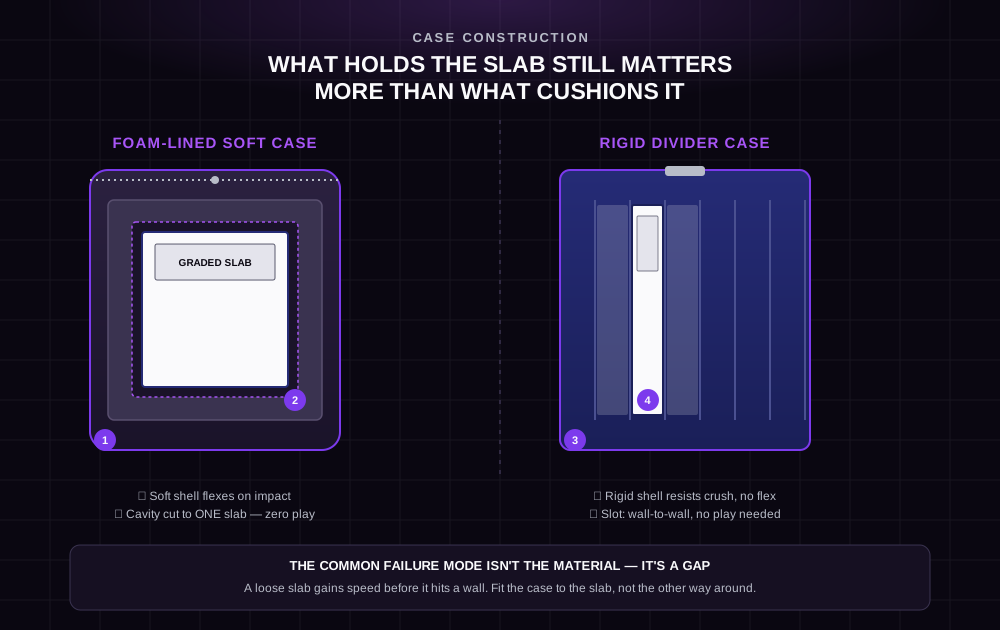
Foam-lined soft cases use a zippered or latched soft shell around a block of foam that's been cut — die-cut or hand-cut — into cavities shaped to hold a slab. The shell flexes on impact instead of resisting it; the foam is doing the actual work of keeping the slab from contacting anything hard. That only works if the cavity is cut close to the slab's actual footprint. A cavity cut for "a slab" in general, rather than the specific footprint of the holder you're carrying, leaves room for the slab to shift — and a shifting slab in a soft case is exactly the failure mode the case exists to prevent.
Rigid divider cases use a hard outer shell with molded or slotted internal dividers that the slab stands upright in. There's no foam, because the wall isn't trying to absorb an impact — it's trying not to flex in the first place. The protection comes from the slab having wall-to-wall contact on both faces of its slot, so there's no direction it can travel before meeting resistance. A rigid case with a loose-fitting slot is worse than a snug foam cavity, because a hard wall with room to build up speed hits harder than a soft one.
Neither construction is categorically better. A soft case is lighter, cheaper per slot, and more forgiving of odd-sized holders. A rigid case protects better against crushing loads — someone setting a heavy bag on top of your case, or your case ending up at the bottom of a pile — because the shell itself doesn't compress.
The variable that actually matters: fit, not cushioning
The common failure mode in both constructions is the same: a gap. A slab that can move half an inch before it contacts a wall arrives at that wall with momentum, and momentum is what chips corners and cracks seams — not the absence of padding. A snug cavity or a snug slot with almost no clearance stops the slab before it can build up any speed at all, which matters more than what material is doing the stopping.
This is also why buying a case "for slabs" without checking it against the actual holders you carry is a mistake. Holders from different grading companies are close in size but not identical, and a case cut tight to one is not automatically tight to another. If you carry a mix, check fit against your worst case, not your best one.
Stacking, orientation, and pressure
Rigid cases that stack on top of each other are designed for it — check the manufacturer's stacking guidance before piling cases higher than intended, since the bottom case in a stack is carrying the weight of everything above it, not just its own slabs. Soft cases generally aren't stack-rated at all; treat them as a single layer in a bag or bin, not a base for other cases.
Orientation matters more for rigid divider cases than for foam ones, since a slab standing upright in a slot relies on gravity working with the slot's geometry, not against it. If a case is designed to be carried upright, carrying it on its side for an extended drive changes which surfaces are bearing the slab's weight.
Getting slabs through airport security
Traveling to a show with graded inventory means going through the same screening as any other checked or carry-on bag, and a dense stack of rigid plastic cases reads unusually on an X-ray. Be ready for a bag to get pulled for a manual look — that's a normal outcome for a bag full of slabs, not a sign anything is wrong. Locks on a checked case should be TSA-recognized locks, which screeners can open and relock without cutting; a non-recognized lock on a checked bag risks getting cut off entirely if the bag is selected for inspection while you're not there. If you're carrying high-value inventory, keep it in a carry-on where that's an option, and keep a written inventory or manifest separate from the case itself, in case you ever need to document what was inside it.
Vehicle transport between shows
The trunk of a car in direct sun gets hot enough, over a few hours, to matter for adhesives and plastics generally — it's worth keeping cases out of a hot trunk on a multi-stop show weekend rather than assuming a sealed slab is immune to heat exposure. Secure cases so they can't slide during braking; a case that's free to slide across a trunk on every stop is absorbing small impacts all day that add up. A case wedged against a seatback or belted down absorbs none of that.
Browse our graded card storage cases, or look at display case rentals if you need show-floor equipment without buying it outright. New to UBIQ WORLD? Apply for a wholesale account.