
The card protection stack — penny sleeve to graded slab, which layer does what
Penny sleeves, perfect fits, toploaders, one-touches and slabs each solve a different problem. What each layer protects against, how they combine, and which stack fits raw singles, trade binders, and vault cards.
"Just put it in a sleeve" is the advice every new collector hears, and it isn't wrong — it's just incomplete. A single penny sleeve stops one kind of damage and does nothing about the others. A raw card sitting loose in a box faces at least four distinct failure modes: surface friction from cards rubbing against each other, corner and edge impact from drops or rough handling, bending from flex or pressure, and slow UV fade from sitting under lights or near a window. No single holder addresses all four. That's why the protection stack exists as a stack — each layer is a specialized answer to one failure mode, and you combine only the layers a given card actually needs.
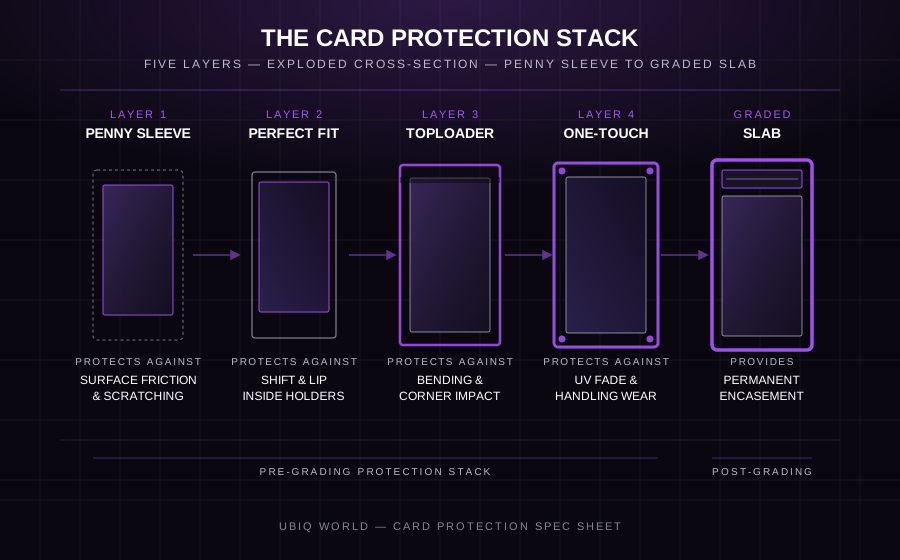
Below is what each layer in the stack actually does, in the order cards normally go into them, followed by three practical combinations that cover almost every situation a shop or collector runs into: bulk commons, trade and shipping, and long-term display or vault storage.
Layer 1 — penny sleeves
The penny sleeve is the innermost layer and, in almost every stack, the first thing that touches the card. It's a thin, snug polypropylene sleeve whose only job is stopping surface friction — the fine scuffing and scratching that happens when card faces rub against each other, against a toploader wall, or against a gloved hand during sorting. It offers no rigidity and no bend protection on its own; a penny sleeve alone will not stop a card from creasing if it's bent or dropped. Cards go in top-down, sleeve opening facing up, so the card can't slide back out during normal handling. Because it's inexpensive and adds almost no bulk, it's the default innermost layer no matter what goes around it — bulk commons get a penny sleeve and nothing else, while high-value cards still wear one underneath a toploader or one-touch.
Layer 2 — perfect fit inner sleeves
A perfect fit sleeve looks similar to a penny sleeve but is cut differently: snugger, with no lip or overhang past the card's edge. That's the entire point. A standard penny sleeve has a small lip that can fold over, catch, or peek out visibly once the card is loaded into a toploader or a magnetic holder. A perfect fit is sized to disappear inside whatever holds it next, so it reads as a clean, lip-free edge once everything is assembled. Think of it as the prep layer: it isn't meant to be the card's only protection, and it isn't really meant to be seen on its own. It's the layer you add right before a card goes into a binder page, a toploader headed for display, or a one-touch, so the finished holder looks tight and intentional rather than bulky.
Layer 3 — toploaders
The toploader is where rigidity enters the stack. It's a rigid, semi-flexible plastic holder that resists bending, so a sleeved card slipped inside is far less likely to crease or warp if the holder gets flexed, squeezed in a stack, or handled roughly in transit. This is the default choice for anything going into a trade, a shipment, or a top-loaded binder page, because it's rigid enough to survive mail handling but still slim enough to store in bulk. Thickness matters more than most people assume — a standard-thickness toploader fits modern Pokémon-sized cards comfortably, but thicker cards, foil-heavy cards, or cards with printing defects can need a different point size to avoid pressure marks at the edges. For a breakdown of which thickness fits which card stock, see our toploader thickness guide.
Layer 4 — magnetic one-touches
A one-touch is the display-grade version of a toploader. It's built from two rigid acrylic halves held together with recessed magnets, so there's no sleeve lip visible at any edge and no channel opening the way a toploader has. That clean, gapless construction is exactly what makes it the layer for cards you actually want people to look at — a shop case, a show table, or a shelf. Some one-touches add UV-filtering acrylic, which slows the fade that comes from prolonged light exposure without changing how the card is handled day to day. Because they're rigid, sealed on all sides by magnetic pressure, and free of a visible sleeve edge, one-touches are the layer of choice any time presentation matters as much as protection.
Slabs
A graded slab is different in kind from the four layers above — it's not something you assemble yourself. A grading service authenticates the card, assigns a grade, and permanently encases it in a sealed hard case. Once that happens, the card doesn't need a penny sleeve or a toploader anymore; the slab is the final holder. What the stack above is really for, in the context of grading, is protecting the card on its way to that point. A card that arrives at a grading service already creased, scuffed, or bent can't be graded up out of that damage, so the sleeve-and-toploader combination you ship a submission in matters as much as how you packed the box. For a full walkthrough of prepping and packing a card before it leaves your hands, see preparing a grading submission.
Three stacks that cover most collections
Most inventory doesn't need every layer. In practice, almost everything a shop or collector handles falls into one of three combinations:
- Raw bulk: penny sleeve only. Fast, cheap, and enough for commons and playset cards that get handled often and aren't worth the bulk of a rigid holder.
- Trade and shipping: penny sleeve plus toploader, secured with a team bag over the top. This is the combination built to survive mail handling and repeated handoffs without the card shifting or creasing inside the holder.
- Display and vault: perfect fit inner sleeve plus magnetic one-touch. No visible lip, rigid on all sides, and built for a card that's going to sit out, get shown, or be stored long-term rather than change hands often.
None of these are permanent decisions — a card can move from a trade stack into a display stack the day it stops changing hands, and a display card can go back into a shipping stack the day it sells. Matching the stack to what the card is doing right now, rather than defaulting to one holder for everything, is what keeps both protection and cost in balance.
Stock up on the layers above in our card protectors category, browse sleeves for penny and perfect fit options by size, check card cases for toploaders and one-touches by the case, or apply for a wholesale account if you're buying for a shop or show table.